Hiroshi Suzuki, Trombone-led groove
B-side
/
Hiroshi Suzuki was one of the leading trombonists of the Japanese jazz scene before leaving Japan for the United States in 1971. He had played in major big bands and, more importantly for this story, alongside musicians who would form the core of Freedom Unity — keyboardist Hiromasa Suzuki, bassist Kunimitsu Inaba, drummer Akira Ishikawa and saxophonist Takeru Muraoka.
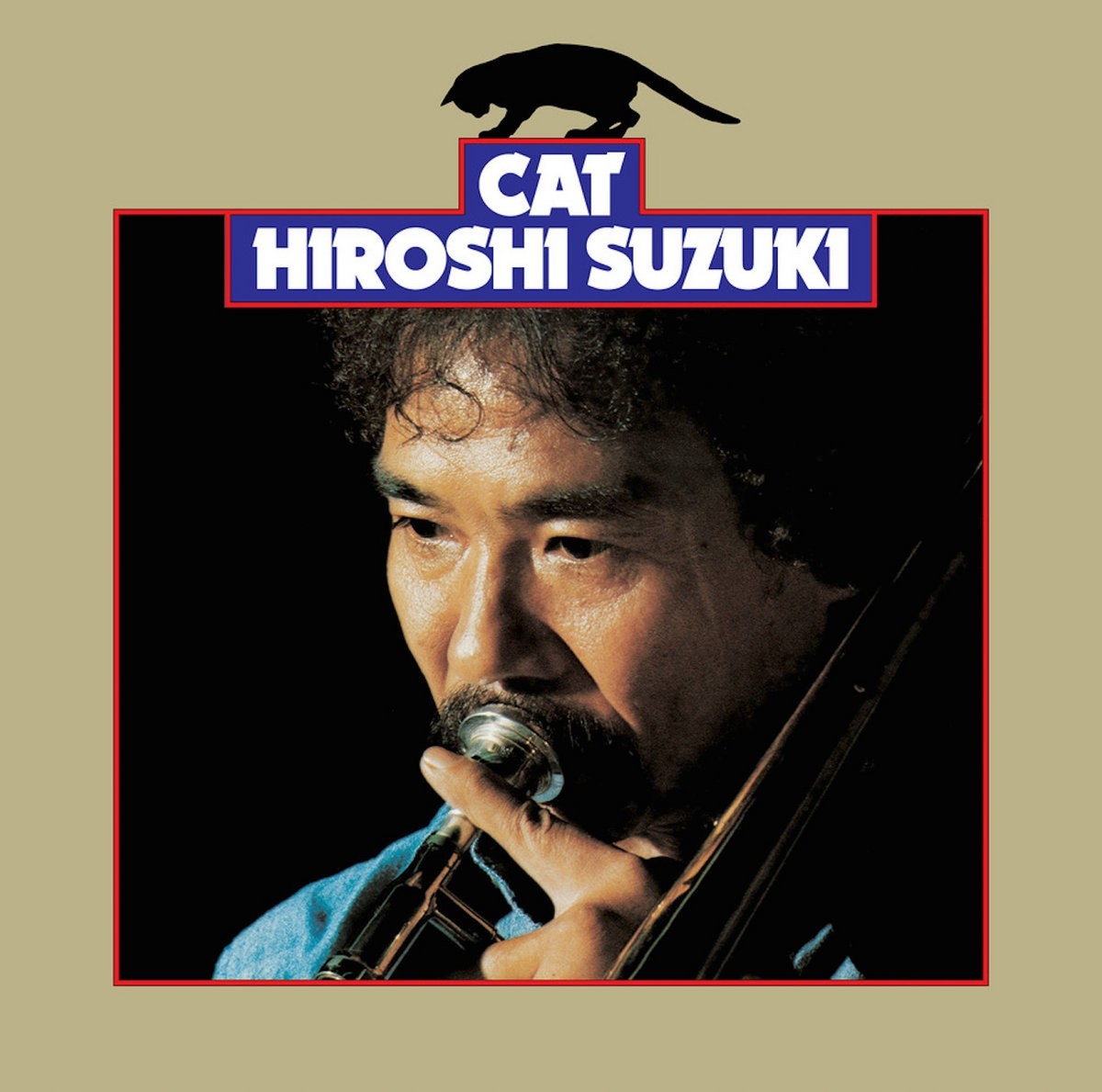
When Suzuki returned to Japan temporarily in 1975, he brought those musicians together again for a short studio session. Cat came out of that reunion. What interests me is that the record does not sound nostalgic: the musicians return to an old configuration, but the music has clearly absorbed the electric, groove-oriented language of the first half of the 1970s.
RETURN / GROOVE
The rhythm section is central to the album. Inaba and Ishikawa give the music considerable weight, while Hiromasa Suzuki’s electric keyboards create much of its warm, fluid surface. Against that foundation, Hiroshi Suzuki’s trombone works particularly well because it is an unusual lead voice for this kind of music — broad, rounded and physical rather than sharp or aggressive.
There is also a sense of economy to the arrangements. The band can stretch out, but the music rarely becomes crowded. Trombone, saxophone and keyboards move in and out of the rhythm section, leaving the groove exposed for long enough to become an element in its own right.
SELECTED RECORD
Cat — 1976
For me, Cat works because it balances two qualities that can easily cancel each other out: weight and ease. The rhythm section is deep and persistent, but the record never feels heavy-handed. Suzuki’s trombone gives it a mellow, almost relaxed surface while the bass, drums and electric piano keep pulling the music forward.
The closing Romance, written by Hiromasa Suzuki, takes that balance furthest. It slows the album down without losing the pulse underneath it — warm, spacious and slightly nocturnal.
LISTEN / ROMANCE
Hiroshi Suzuki — trombone
Takeru Muraoka — saxophone
Hiromasa Suzuki — keyboards, electric piano
Kunimitsu Inaba — bass
Akira Ishikawa — drums
Recorded: 8–10 October 1975
Location: Columbia 1st Studio, Tokyo
Engineer: Norio Okada
Original issue: Nippon Columbia, SP-7006
Released: 25 February 1976
Hiroshi Suzuki was one of the leading trombonists of the Japanese jazz scene before leaving Japan for the United States in 1971. He had played in major big bands and, more importantly for this story, alongside musicians who would form the core of Freedom Unity — keyboardist Hiromasa Suzuki, bassist Kunimitsu Inaba, drummer Akira Ishikawa and saxophonist Takeru Muraoka.
When Suzuki returned to Japan temporarily in 1975, he brought those musicians together again for a short studio session. Cat came out of that reunion. What interests me is that the record does not sound nostalgic: the musicians return to an old configuration, but the music has clearly absorbed the electric, groove-oriented language of the first half of the 1970s.
RETURN / GROOVE
The rhythm section is central to the album. Inaba and Ishikawa give the music considerable weight, while Hiromasa Suzuki’s electric keyboards create much of its warm, fluid surface. Against that foundation, Hiroshi Suzuki’s trombone works particularly well because it is an unusual lead voice for this kind of music — broad, rounded and physical rather than sharp or aggressive.
There is also a sense of economy to the arrangements. The band can stretch out, but the music rarely becomes crowded. Trombone, saxophone and keyboards move in and out of the rhythm section, leaving the groove exposed for long enough to become an element in its own right.
SELECTED RECORD
Cat — 1976
For me, Cat works because it balances two qualities that can easily cancel each other out: weight and ease. The rhythm section is deep and persistent, but the record never feels heavy-handed. Suzuki’s trombone gives it a mellow, almost relaxed surface while the bass, drums and electric piano keep pulling the music forward.
The closing Romance, written by Hiromasa Suzuki, takes that balance furthest. It slows the album down without losing the pulse underneath it — warm, spacious and slightly nocturnal.
LISTEN / ROMANCE
Hiroshi Suzuki — trombone
Takeru Muraoka — saxophone
Hiromasa Suzuki — keyboards, electric piano
Kunimitsu Inaba — bass
Akira Ishikawa — drums
Recorded: 8–10 October 1975
Location: Columbia 1st Studio, Tokyo
Engineer: Norio Okada
Original issue: Nippon Columbia, SP-7006
Released: 25 February 1976

